










Volume and features vary by model and manufacturer. The values given here are typical market averages.
Everyday backpack, hiking backpack, travel backpack, business backpack – these terms are often used interchangeably. Yet the models differ considerably in volume, carrying system, features and durability. This guide shows you the 6 most important types of backpacks, what they're suited for, and which brand fits which category.
The 6 most important backpack types at a glance
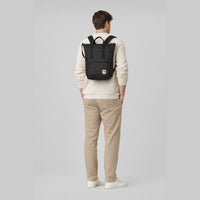
Everyday Backpack
For university, shopping, weekends. Light, compact, stylish – matches almost any outfit.
Business Backpack
With padded laptop compartment, organiser and clean design – for the office and business trips.
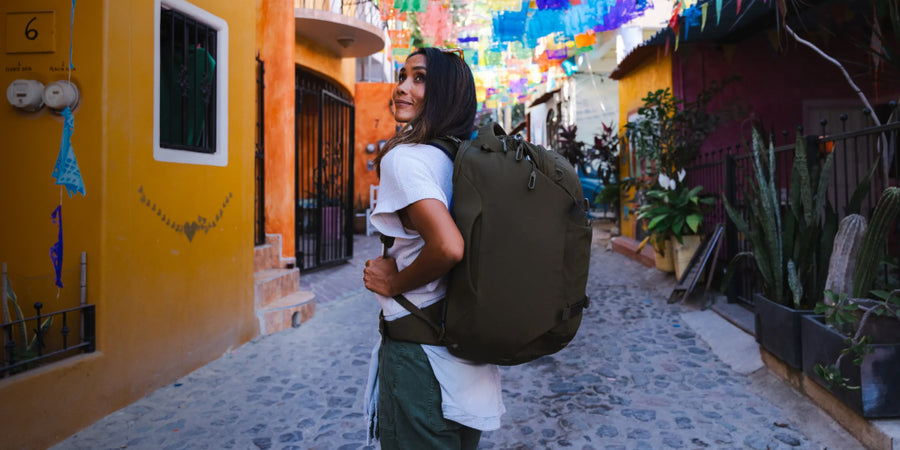
Travel Backpack
Flexible alternative to a suitcase: opens like a holdall, with a carrying system like a trekking model.
Hiking Backpack
Day trips in the mountains or on flat terrain. Comes with hydration system compatibility and a rain cover.
Trekking Backpack
Multi-day mountain tours, mountain hut hikes, long-distance trips with a tent. Features a hip belt for load transfer.
School Backpack
Ergonomic, with a chest strap and reflective elements. For primary and secondary school.
Everyday Backpack – the all-rounder
The everyday backpack has a volume of 15–25 litres, usually a main compartment, a front compartment and a laptop sleeve for 13–15-inch devices. It's lightweight (400–800 g), versatile, and available in many colours and styles. Ideal for:
- University: laptop, 2–3 books, notebook, snacks, water bottle
- Shopping / errands: instead of plastic bags
- Weekend trips: carry-on alternative for 1–2 days
- Everyday companion: train journeys, walks, cafés
Recommended brands: Eastpak, Herschel, Fjällräven (the Kanken classic). For sport and outdoor style, also Jack Wolfskin.
Business Backpack – the professional companion
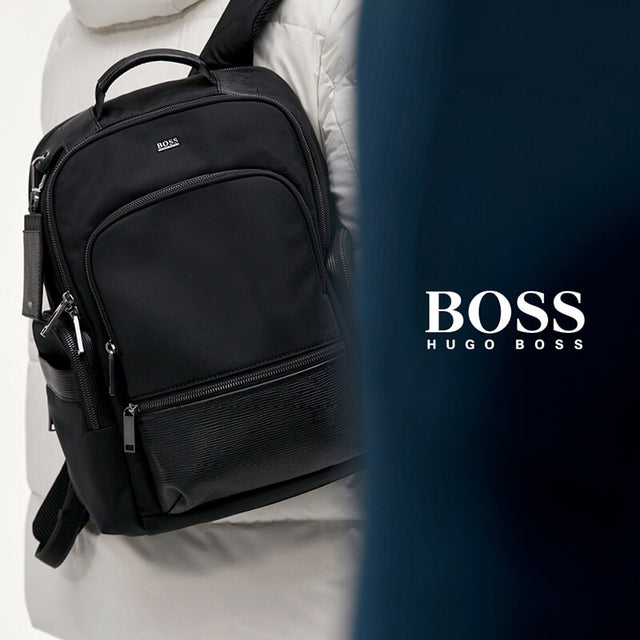
The business backpack is specifically designed for the office and everyday business life. Its features:
- Padded laptop compartment: 15–17 inches, shock-protected storage
- Clean design: no conspicuous logos, muted colours (black, dark grey, anthracite)
- Organisation compartments: business cards, pens, phone, charging cable storage
- Water-repellent: for a rainy commute to the office
- Professional carrying style: two straps or one-handed carry
Ideal for the business-trip mix: with a suitcase at the airport and a business look. For details on the matching travel-business hybrids, click here.
Travel Backpack – the suitcase alternative
The travel backpack combines the carrying system of a trekking model with the opening of a holdall. Unlike classic backpacks, you don't have to pack from the top – it opens at the front, so you can pack it flat like a suitcase. Typical volumes:
- 35–40 L: carry-on compliant (e.g. Osprey Farpoint 40)
- 50–70 L: multi-week trips, Southeast Asia backpacking
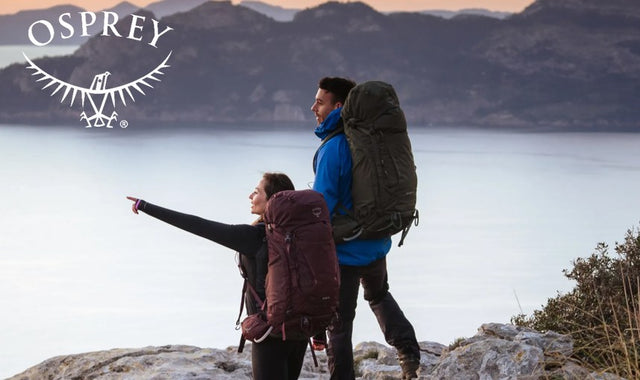
The travel backpack is the perfect choice for backpackers, round-the-world travellers, and anyone who often travels by public transport. Our recommendations: Osprey (Farpoint for men, Fairview for women – see our Farpoint/Fairview guide), and the lighter Kestrel/Kyte system for shorter trips.
Hiking Backpack – for a day out in nature
The hiking backpack is designed for tours of 4–8 hours. Its volume of 20–40 litres holds snacks, drinks, a change of clothes, a rain jacket, sun protection and a small first-aid kit. Key features:
- Carrying system: ventilated back (mesh tension) prevents sweating
- Hydration system: ready for a hydration bladder (2–3 litres) with hose outlet
- Rain cover: integrated in the bottom compartment
- Chest and hip straps: stabilise the backpack while carrying
- Side compression: tightens the load when it's not fully packed
Typical models: Osprey Talon/Tempest (22–33 L), Jack Wolfskin Moab or Fjällräven Abisko. Details in our Talon/Tempest guide.
Trekking Backpack – for multi-day mountain tours
The trekking backpack is the big brother of the hiking backpack. With 50–80 litres of volume, it fits a sleeping bag, tent, multi-day provisions, and a change of clothes. Its special features:
- Anatomically shaped hip belt: transfers 70–80% of the load to the hips
- Adjustable back length: adapts to the wearer's height
- Separate top/bottom compartments: sleeping bag at the bottom, day gear on top
- Side access: quick access without having to unpack everything
- Tent pole holders, ice axe loops for outdoor gear
For mountain hut hikes, the Camino de Santiago, or trekking in Patagonia, models from Osprey, Fjällräven or Jack Wolfskin are the top choice.
School Backpack – ergonomic and safe
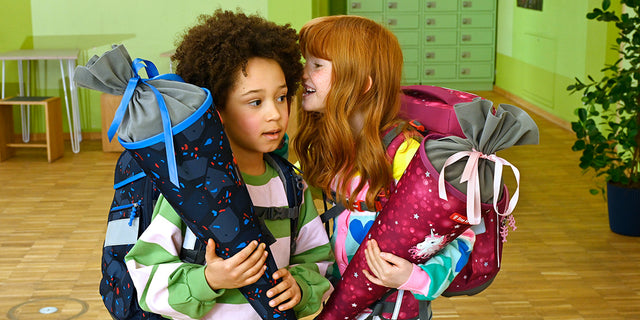
The school backpack has to do more than a regular everyday backpack. It carries heavy books and notebooks, is sturdy enough for everyday school use, offers reflective elements for the journey, and has an ergonomic carrying system. Key criteria:
- Ergonomic: padded straps, chest and hip straps
- Reflectors / high visibility: especially important for younger pupils
- Sturdy base: safe to set down, withstands heavy books
- Organisation: notebook compartment, pen loops, laptop sleeve
For primary school children, we recommend Step by Step, Scout or Coocazoo. For secondary schools, Eastpak or Herschel are also stylish alternatives. More in our guide to starting school.
Volume matrix: which backpack for which purpose?
| Volume | Backpack type | Purpose | Typical brands |
|---|---|---|---|
| 15–25 L | Everyday / Business | University, office, weekend | Eastpak, Herschel, Fjällräven |
| 20–30 L | School | Primary school, secondary school | Step by Step, Scout, Coocazoo |
| 22–33 L | Day hike | Mountain tour 4–8 h | Osprey Talon/Tempest |
| 35–45 L | Travel (carry-on) | Backpacker weekend, holiday | Osprey Farpoint 40 |
| 50–70 L | Travel / Trekking | Round-the-world trip, multi-day tour | Osprey Aether, Jack Wolfskin |
| 70–90 L | Trekking / Expedition | Camping tours, Alpine crossings | Osprey Xenith, Fjällräven Kajka |
Which backpack suits me? 4 decision criteria
- Purpose: What's the main use? Everyday use and hiking are fundamentally different.
- Volume: Use the overview as a guide – better one size smaller than too big. A half-empty backpack sits awkwardly.
- Carrying comfort: Padded shoulder straps, chest and hip straps, and a ventilated back are the minimum standard from 20 L upwards.
- Durability: Daily use calls for sturdy materials (Cordura, ripstop). For a short holiday, a cheaper option will also do.
Tip: A good backpack should fit like a glove – try it on before buying (including the weight!). Back length matters more than overall height.
Frequently asked questions about backpack types
Which backpack is right for me?
It depends on the purpose: for everyday use and university, a 15–25 L model is enough. For hikes, you need a 20–40 L hiking backpack with a proper carrying system. For multi-day trips, a travel backpack (35–70 L) makes sense. Use our volume matrix as a guide.
How many litres does a hiking backpack need?
For a day tour, 20–30 litres is enough. For longer tours with a rain jacket, a change of clothes and 2 water bottles, 30–40 litres is more comfortable. Important: a padded back and chest/hip straps.
Travel backpack or suitcase – which is better?
A suitcase is unbeatable on smooth surfaces – hotels, airports, conferences. A backpack wins on cobblestones, stairs, public transport and long walks. Backpackers and round-trip travellers tend to prefer the backpack.
Which brand is best for backpacks?
It depends on the intended use: Osprey leads the way in travel and hiking backpacks. Fjällräven impresses with Nordic style and sturdy canvas. Eastpak offers affordable everyday models. For school backpacks, Step by Step and Scout are the top brands.
What's the difference between a hiking and a trekking backpack?
The hiking backpack (20–40 L) is designed for day trips. The trekking backpack (50–80 L) has an anatomical hip belt that transfers 70–80% of the load to the hips, and is designed for multi-day tours with a sleeping bag and tent.
Can I take a backpack as carry-on luggage?
Yes, if it meets the airline's size requirements. A 35–40 L travel backpack (such as the Osprey Farpoint 40) is designed precisely to carry-on dimensions (55×40×23 cm). Important: it must fit into the size-check frame at the gate. Details in our carry-on guide.
Conclusion: the right backpack for every situation
There's no single "perfect" backpack – every situation calls for its own. The key rules:
- Everyday & university: 15–25 L, lightweight, with laptop compartment
- Business: clean design, water-repellent, organiser
- Hiking (day trip): 20–30 L, ventilated back, chest strap
- Travel / backpacking: 35–70 L, front-loading opening
- Trekking: 50–80 L, hip belt, two-zone compartment
- School: ergonomic, reflective, sturdy base
You'll find our complete range of backpacks in the backpack category. For more detailed guides, check out how to pack a backpack correctly, choosing the right suitcase size, and our guide on starting school and school backpacks.