











In short
For a one-week winter holiday you need 70 to 90 litres of luggage, and for two weeks 90 to 120 litres. If you're flying, a large hardshell suitcase protects your clothes from moisture and knocks. If you're travelling by car or by train with a transfer, a water-repellent travel bag or wheeled duffel bag is more flexible. For the slopes, add a small ski backpack.
Winter holidays push your luggage to its limits: ski jackets, ski trousers, thick jumpers and winter boots need far more space than summer clothing, and the route between the car park and accommodation is often covered in snow, slush and grit. Here you'll find the right size, the right luggage for your journey, packing tips and a checklist you can tick off.
How many litres do you need for a winter holiday?
Winter clothing is bulky. Plan for around a third more volume than for a summer holiday of the same length.
| Trip duration | Volume in winter | Suitable luggage |
|---|---|---|
| Weekend, 2 to 3 days | 40 to 60 l | Travel bag or medium-sized suitcase |
| 1 week | 70 to 90 l | Large suitcase, large travel bag |
| 2 weeks | 90 to 120 l | Large suitcase, wheeled duffel bag |
| Family, 1 week | 2 large items of luggage or more | Suitcase plus travel bag for ski clothing |
These are guide values. You'll find the litre capacities for suitcase sizes S to XL in our guide Suitcase sizes at a glance.
Suitcase, wheeled duffel or duffel bag: what suits your journey?
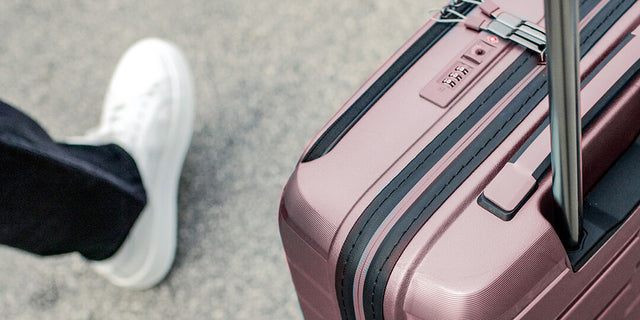
Flying
90 to 110 l
A sturdy shell matters most at the baggage carousel and on wet tarmac. Large wheels also cope well with slush outside the hotel.
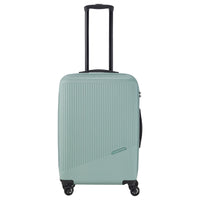
 TITANTITAN OVERSEAS101 l, polycarbonate, two TSA locks
By car
70 to 100 l
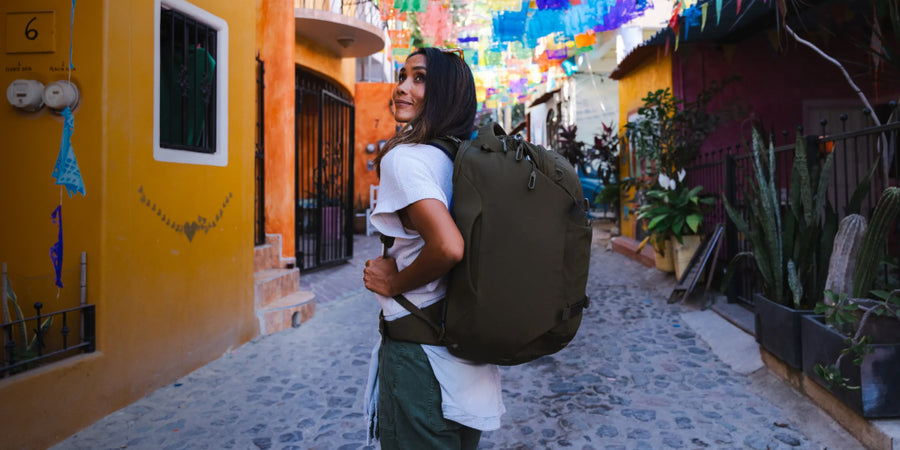
A soft bag fits alongside skis and ski boots in any boot and can be carried as a backpack through the snow.
 The North FaceThe North Face Base Camp Duffel L 9595 l, water-repellent, backpack straps
Train and transfer
60 to 90 l
Wheels for the platform, shoulder straps for steps and snowy paths. A wheeled duffel bag can do both.
 DeuterDeuter Duffel Pro Movo 9090 l, water-repellent, wheels and shoulder straps
On the slopes
20 to 30 l
For a water bottle, snack, spare gloves and sun cream. On ski tours, avalanche equipment is added too.
 MammutMammut Nirvana 2828 l, compartment for avalanche equipment, ski attachment
You'll find more models among the hardshell suitcases, the travel bags with wheels, the travel bags without wheels and the ski backpacks. For outings without skis, a normal daypack is enough.
What matters with winter luggage
- Protection from moisture: A hard shell keeps out snow and rain, while with bags water-repellent material stops slush from soaking through.
- Wheels: Large, sturdy wheels cope better with slush and grit than small ones. Wipe them down after arrival so no salt or dirt gets into the room.
- Volume in reserve: Expandable suitcases gain extra litres via a zip, for example for souvenirs on the way back.
- Separate compartments: A dedicated compartment or bag for wet ski clothing and shoes keeps the rest of your clothes dry.
- Carrying options: Backpack straps or shoulder straps help when the path to your accommodation hasn't been cleared.
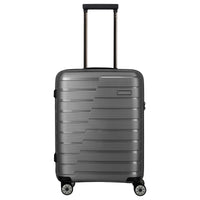
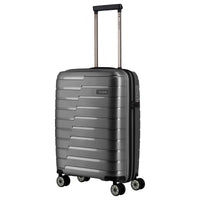
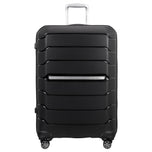
 SamsoniteSamsonite Flux 4-wheel trolley L 75 cm exp. (black)108 l, polypropylene, expandable
 DeuterDeuter Duffel Pro 6060 l, water-repellent, ideal for weekends
More choice among the large suitcases and across the whole luggage range. Whether a hard shell or fabric suits you better is explained in our guide Hard shell or fabric.
Packing tips for your winter holiday
- Wear the bulkiest items: Wear your ski jacket and winter boots while travelling. This saves more space than any packing trick.
- Roll instead of fold: Roll jumpers, fleeces and thermal underwear tightly. This saves space and prevents creases.
- Compress: Compression packing cubes squeeze the air out of bulky clothing and keep things organised.
- Heavy items at the bottom: Put shoes and heavy items on the wheel side, lighter items on top.
- Use empty spaces: Socks, gloves and chargers fit inside your shoes.
- Separate wet and dry: Pack a bag for damp ski clothing for the return journey.

You'll find more packing cubes and organisers under Suitcase organisation. More tricks are in our 10 packing tips.
Packing list for your winter holiday
| Category | What to include |
|---|---|
| Clothing | Ski jacket, ski trousers, thermal underwear, fleece or jumper, hat, gloves, scarf or buff, warm socks |
| Footwear | Winter boots, comfortable shoes for the evening, slippers |
| Skiing and snowboarding | Helmet, ski goggles, sunglasses, ski backpack, avalanche equipment for ski tours |
| Care products | High-SPF sun cream, lip balm, moisturiser, toiletries |
| Technology | Smartphone, chargers, power bank (in hand luggage), camera |
| Documents | ID, insurance card, booking confirmations, ski pass, travel first-aid kit |
Warm accessories such as hats belong right at the top of your bag so you have them to hand as soon as you arrive.
Frequently asked questions about luggage for winter holidays
Which suitcase is best for a ski holiday?
If you're flying, a large hardshell suitcase with 90 to 110 litres is a good choice: it protects your clothes from moisture and knocks at the baggage carousel. If you're travelling by car, a large, water-repellent travel bag is often more practical, as it adapts to the shape of the boot and can also be carried through snow.
How many litres do I need for a one-week winter holiday?
Plan for 70 to 90 litres for one week. That's roughly a third more than in summer, as jumpers, ski trousers and winter boots take up a lot of space. For two weeks, 90 to 120 litres makes sense, while 40 to 60 litres is enough for a weekend.
Suitcase or travel bag for the drive to the mountains?
For the car, a travel bag is usually more practical: it fills gaps in the boot and can be carried from the car park to your accommodation, even over snow and steps. Models with backpack straps make this especially easy.
How do I transport ski boots?
Ideally in their own bag, so snow and dirt don't get onto your clothes. If you're flying, check with your airline whether ski boots can go in your registered sports luggage or need to go in your suitcase. Rules vary depending on the airline and fare.
How do I pack bulky winter clothing to save space?
Wear the thickest jacket and the heaviest shoes while travelling. Roll jumpers and fleeces and put them into compression packing cubes, which squeeze out the air. Socks and gloves fill the empty spaces inside your shoes.
What should go in your hand luggage for a winter holiday?
ID, medication, chargers, a power bank and a warm layer with a hat and gloves. If your suitcase arrives later, you'll be prepared for the first evening. Power banks and spare batteries always belong in hand luggage, never in checked luggage.