












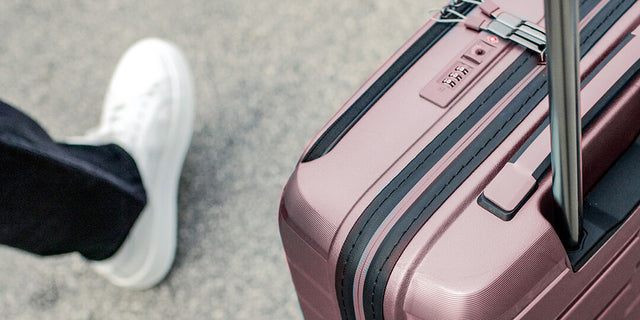




Material technologies keep evolving – we update this comparison regularly.
Should it be a hardside suitcase or rather a softside case (fabric)? Both construction types have their strengths – the right choice depends on your travel style. Whether frequent flyer, family holidaymaker, city traveller or adventurer: in this guide we compare both materials directly, show pros and cons, and help you find the right suitcase for your needs.
The two material classes at a glance
Robust outer shell, weatherproof, good for checked luggage on flights.
Flexible fabric material, external pockets, often expandable volume.
Hardside suitcases – pros and cons
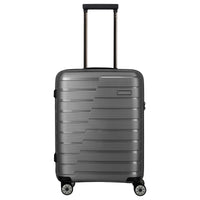
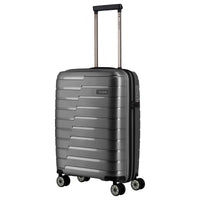
The hardside suitcase is the standard choice for air travel. It protects contents and structure even with rough handling at the airport. Modern polycarbonate shells are lighter and more flexible than the old ABS models.
Advantages
- Protects fragile contents well
- Weatherproof and water-resistant
- Scratch- and impact-resistant
- Easy to clean (wipeable)
- Keeps its shape, stays looking good
- Good security: closes firmly
Disadvantages
- No expandable volume (usually)
- No external pockets for quick access
- Scratches are visible (on dark colours)
- Rather rigid, doesn't fit into tight spaces
- Can crack under very hard impacts
- Often heavier empty weight on budget models
Polycarbonate vs. ABS – what you should know
Polycarbonate is lighter, more flexible and more robust than ABS plastic. A 75 cm polycarbonate suitcase often weighs 3.5–4.5 kg, an ABS model 4.5–5.5 kg. Every kilo counts when flying – polycarbonate is worth it from mid-range upwards. Budget ABS suitcases, however, are perfectly adequate for occasional car and train journeys.
Softside suitcases – pros and cons
Softside suitcases (also called "fabric suitcases") are the flexible all-rounders. External pockets, expandable volume and low weight make them favourites among frequent travellers and business people.
Advantages
- Often lighter than hardside
- External pockets for quick access
- Expandable volume (+15–25%)
- Adapts better to car boots
- Absorbs impacts through flexibility
- Quiet rolling noise, discreet
Disadvantages
- Less protection for fragile contents
- Not waterproof (impregnation helps)
- Zips can tear
- Harder to clean (stains)
- More prone to tears and abrasion
- Often loses shape over time
The direct comparison
| Criterion | Hardside | Softside | Recommendation |
|---|---|---|---|
| Empty weight | 2.5–5 kg | 2–4 kg | Softside (slightly) |
| Protection for contents | Very high | Medium | Hardside |
| Weather resistance | High | Low | Hardside |
| Volume flexibility | Fixed | Expandable | Softside |
| External pockets | Rare | Many | Softside |
| Packing in a tight car boot | Rather difficult | Flexible | Softside |
| Lifespan | 10+ years | 5–8 years | Hardside |
| Cleaning | Easy (wipeable) | Difficult | Hardside |
| Price | wide range | wide range | Similar |
What suits your travel style?
Robust protection for frequent check-in, easy to clean.
More space through expansion, more flexible for holiday shopping.
Lightweight, lots of external pockets for cards, passport, snacks.
Best protection on long flights and rough handling at transfer airports.
Tip: Many travellers own both. A lightweight softside case as carry-on luggage, a robust hardside suitcase as large checked luggage. This way you're perfectly equipped for every trip.
What do the two materials cost?
Both material types cover the full price range – from entry-level to luxury:
- Entry-level: ABS hardside or simple polyester softside luggage
- Mid-range: Polycarbonate or nylon softside (Samsonite, Titan, Travelite)
- Premium: High-quality polycarbonate (FPM Milano, Porsche Design) or luxury nylon
- Luxury: Aluminium hardside or leather softside luggage
More details in our suitcase comparison or our size guide.
Aluminium suitcases – the third option
Besides hardside and softside, there's a third material class with aluminium suitcases – high-quality, extremely robust, but also heavier and more expensive. Typical features:
- Weight: usually 4–6 kg (higher than polycarbonate)
- Price: upper price segment
- Lifespan: 15+ years with good care
- Brands: FPM Milano, some Porsche Design
Aluminium suitcases are more of a statement piece than an everyday travel companion. More on this in our FPM Milano review.
Frequently asked questions about the material comparison
Is a hardside suitcase better than softside?
It depends on your travel style. Hardside offers better protection and weather resistance – ideal for air travel. Softside is lighter, expandable and has external pockets – ideal for car/train journeys and city trips. Both materials cover the full price range.
Which material is lighter?
Modern polycarbonate hardside cases are about as light as nylon softside cases (2.5–4.5 kg at 75 cm). Budget ABS suitcases are heavier (4.5–5.5 kg). Anyone focused on weight should choose polycarbonate or high-quality nylon.
What's the difference between polycarbonate and ABS?
Polycarbonate is more flexible, lighter and more robust than ABS. ABS is an affordable standard plastic, polycarbonate a premium material. Frequent flyers and travellers should invest in polycarbonate – the durability pays off.
Is a softside suitcase waterproof?
No, softside suitcases are not waterproof. However, most have a water-repellent impregnation that keeps out rain and light moisture. In heavy rain or on wet baggage carousels, moisture can get in – hardside has the advantage here.
Which suitcase type lasts longer?
Hardside suitcases generally last longer (10+ years) than softside (5–8 years). Softside suffers from abrasion, tears and deformation over time. Hardside has only one risk: hard impacts can cause cracks.
Can a suitcase be repaired?
Wheels and handles are replaceable on both materials (manufacturer service). On hardside, cracks are hard to repair – zips on softside, on the other hand, are easily replaceable. Samsonite and Titan offer repair services for their suitcases.
Conclusion: there's no universal winner
Hardside scores with protection, weather resistance and durability. Softside impresses with flexibility, expandability and external pockets. The decision depends on your travel style:
- For checked flight luggage: polycarbonate hardside
- For frequent city trips: softside with laptop compartment
- For family trips: softside for extra volume, hardside to protect valuable contents
- For long-haul travel: robust hardside with TSA lock
Have you made up your mind? In our hardside suitcases and softside luggage categories you'll find the right model. Or take a look at our suitcase comparison 2026 for concrete recommendations.








Danke für die vielen Tipps und Infos, haben mir sehr geholfen und machen mir die Entscheidung leichter.